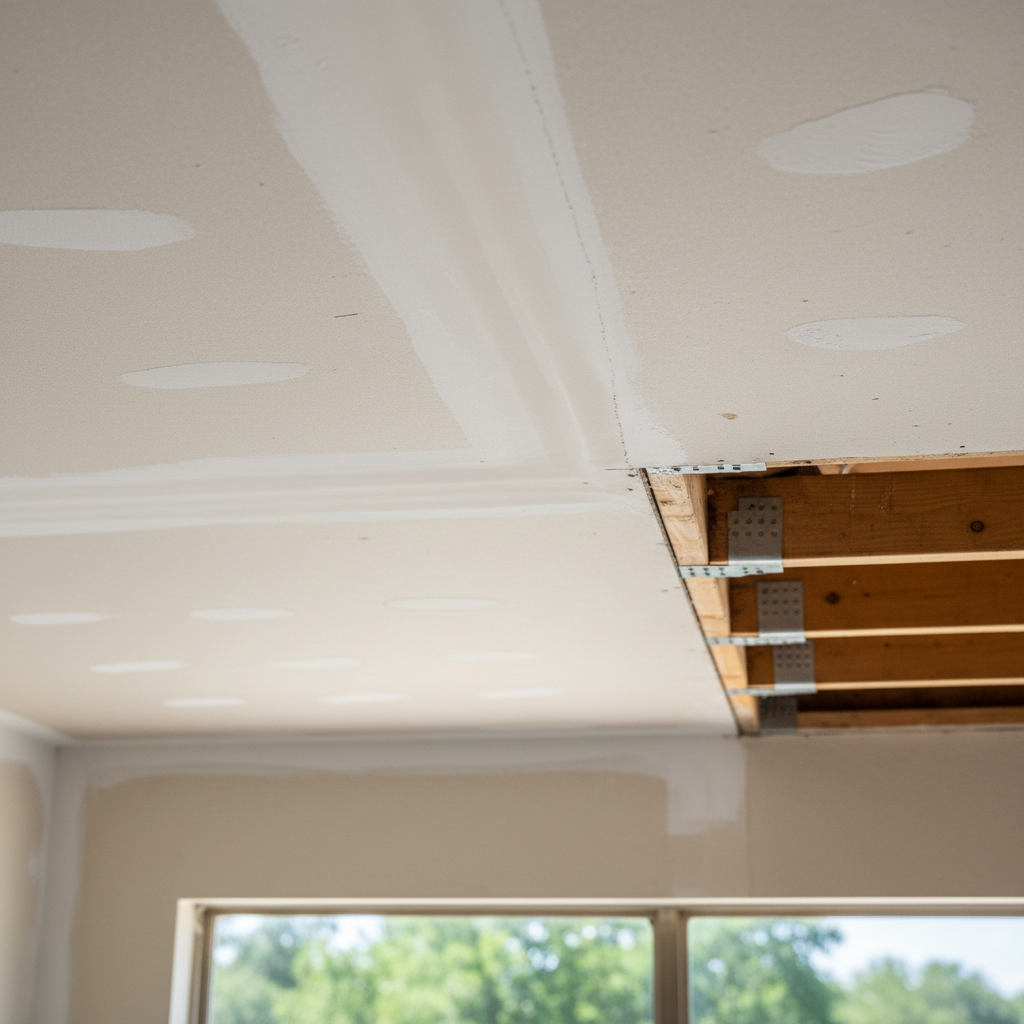
Finding a water stain on your ceiling during a heavy North Texas storm will ruin your day. If you live in Allen, you already know how severe our spring thunderstorms and sudden temperature shifts can test a roof defense system. When water starts finding its way past your shingles and into your attic, time is money. Here is how you can handle the situation smartly, from the moment you spot the drip to the final repair stages of Water Damage Restoration.
Before the Repair: Triage and Containment
The very first thing you need to do when water enters your home is limit the damage. Grab a bucket, clear out any furniture underneath the drip, and head up to the attic if it is safe to do so. Finding the exact entry point can be tricky because water travels along rafters and joists before finally pooling and dripping through your drywall. Anchor Restoration often sees leaks tracking several feet away from the actual roof breach in Allen, TX.
- Move valuables away from the affected area immediately.
- Use a small nail to puncture the center of a bulging ceiling blister to relieve trapped water pressure.
- Take clear photos of the damage for your records and potential insurance claims.
Avoid climbing onto your roof while it is still raining or wet. Pitch and composite shingles become slicker than ice, and a fall is not worth saving an hour of waiting.
What You Can Realistically Do Yourself
Once the weather clears and your roof dries out, you can assess whether this is a DIY job or something that requires backup. If the leak is minor and traces back to a simple, accessible spot, you might be able to handle it.
You can easily replace a cracked rubber boot around a plumbing vent pipe with a tube of high-grade roofing sealant or an extra collar if you are comfortable on a ladder. Clearing out clogged valley leaves or sealing small gaps around flashing can also be weekend DIY tasks. However, if the issue involves compromised decking, multi-layer shingle removal, or steep pitches common in many established Allen subdivisions, you need to step back.
When to Call a Professional Contractor
Most structural roof leaks require professional eyes. If your roof is past its mid-life mark or sustained heavy wind and hail damage during a Collin County storm, patching a symptom won't fix the core failure. Professional contractors bring specialized tools like moisture meters and thermal cameras to find hidden rot inside your roof deck before it spreads mold.
We have seen homeowners try to slap roofing tar over complex flashing failures around chimneys, only to watch water find a new way inside the next week. Calling a pro ensures the flashing, underlayment, and shingles are integrated properly to withstand the next heavy downpour. For homes and businesses in Allen, Anchor Restoration provides Water Damage Restoration services.
After the Repair: Interior Restoration
Stopping the leak is only half the battle. Once the roof is watertight, you have to deal with the interior water damage. Never paint over a water stain on drywall right away. If the insulation or drywall behind it stayed damp, mold will start growing within forty-eight hours.
Run a dehumidifier in the room, cut out severely warped drywall sections, and make sure your attic insulation hasn't clumped up and lost its R-value. Taking care of these details now prevents costly structural rot and keeps your indoor air clean. The work will hold up for many years in the Allen climate.